

Science, Technology and Production to Converge at Antalya Agricultural Technopark
Speaking about Antalya Agricultural Technopark, which aims to become a centre for agricultural technology, production and innovation in Antalya, Rector Prof. Dr. Özlenen Özkan announced that the leasing process for areas allocated to entrepreneurs and companies is expected to begin within six months. Dr. İbrahim Yavuz, General Manager of Antalya Technopark, stated that preliminary meetings with 35 companies had been completed.
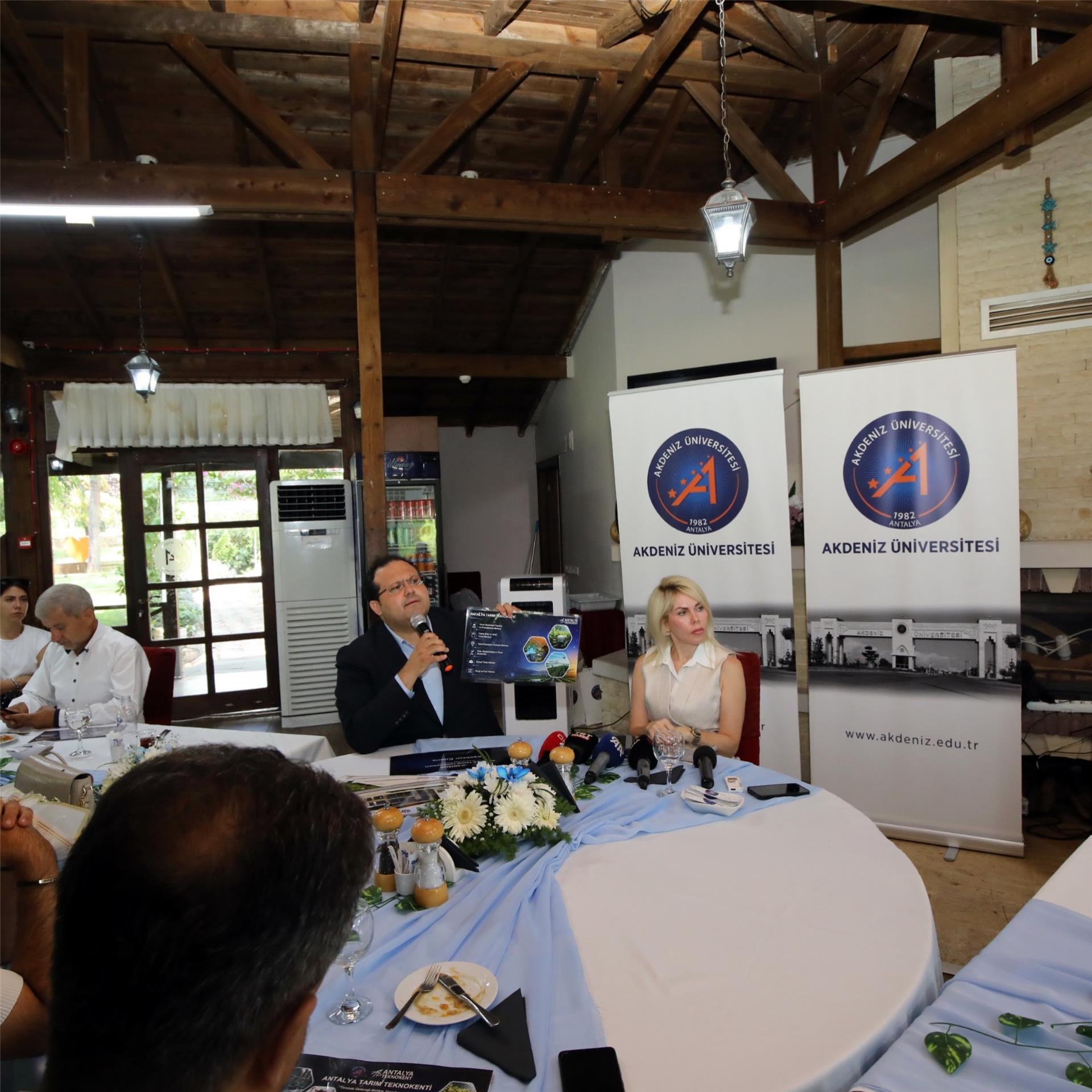
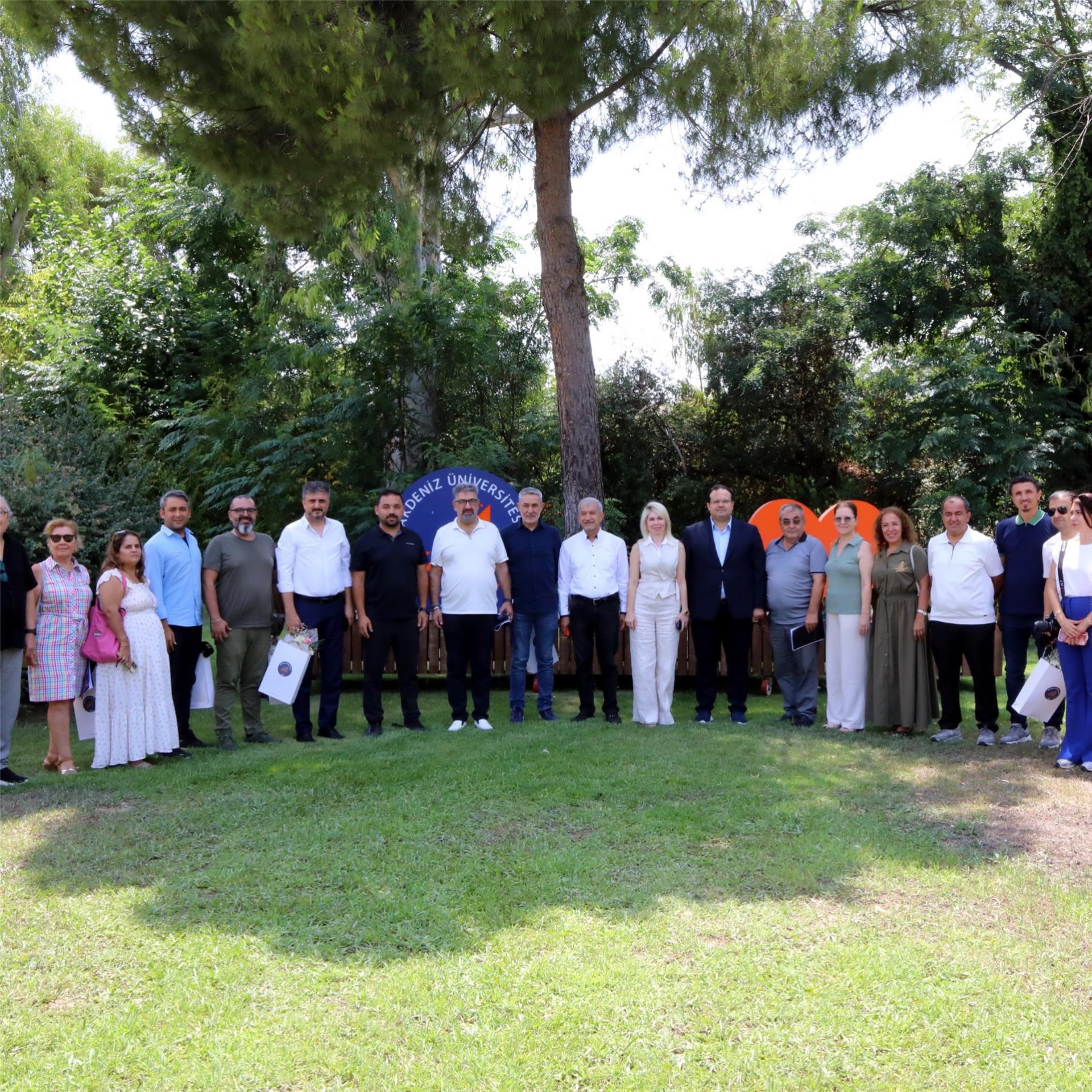
Prof. Dr. Özlenen Özkan, Rector of Akdeniz University, met with members of the press at a programme held at the university's social facilities. Congratulating journalists on July 24, Journalists and Press Day, she emphasised that journalism is a profession requiring considerable effort and responsibility. Noting that members of the press work with great dedication to deliver accurate and timely news to the public, Özkan said, “The work you do is extremely valuable and demanding. You are constantly out in the field, especially in this hot weather. I wish you strength and success.”
Emphasising the important role of the media in communicating Akdeniz University's activities to the public, Özkan added, “You have always done an excellent job of communicating our university's work to the public. Hearing about our work from you is far more valuable than hearing it directly from us. On behalf of our university, I thank you all. We are grateful for your presence and support.”
OUTLINING THE VISION FOR AGRICULTURAL TECHNOPARK
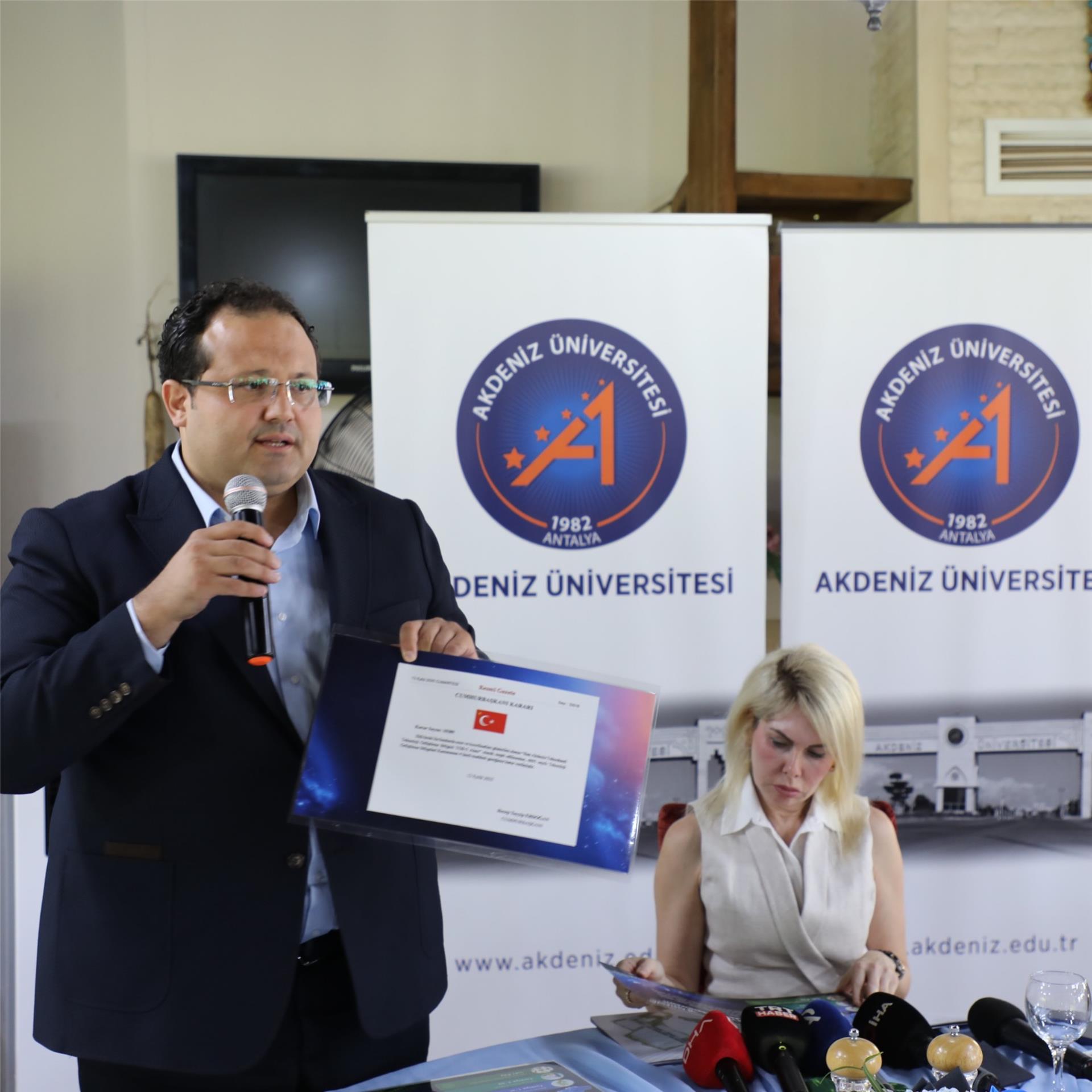
Providing information about the Antalya Agricultural Technopark Project, Rector Özkan recalled that, by Presidential Decree, a 1,100-decare area in Aksu was designated as an Agricultural Technopark in September 2025. She noted that the university already operates a technopark covering 365 decares within its campus and explained that, from the very beginning of her tenure, they had been exploring ways to bring the Aksu site into productive use for agriculture and technology.
Özkan stated that the project had also been presented to private-sector representatives, who responded positively to the idea. She said, “Everyone was very receptive to the idea of an Agricultural Technopark. We would like to thank our President, Recep Tayyip Erdoğan, and our Minister of Industry and Technology for their support throughout this process. When we presented the proposal, they immediately offered their support, and the area was designated as an Agricultural Technopark.”
R&D, PRODUCTION AND SUSTAINABLE AGRICULTURE TO CONVERGE IN ONE LOCATION
Özkan highlighted that the 1,100-decare site is fertile agricultural land in Aksu, adjacent to EXPO and BATEM. She clarified that designating the area as a technopark would not open it up to conventional construction.
The site will host R&D and product development centres, laboratories, offices, greenhouses and experimental fields. Strategic research activities, including plant breeding, isolate research and the establishment of a gene bank, will also be carried out there.
Emphasising that the primary objective today is not simply to increase production but to achieve greater agricultural efficiency with less water, Özkan underlined the importance of developing drought-resistant seeds and implementing sustainable agricultural practices.
BRINGING UNIVERSITIES AND THE PRIVATE SECTOR TOGETHER
Özkan noted that the Faculty of Agriculture conducts significant research projects, but that private-sector support is essential to translate these findings into practical applications. She explained that the Agricultural Technopark would bring universities, scientific research and the private sector together under one roof.
“We want companies that are genuinely committed to conducting R&D to operate here,” she said, adding that the long-term vision includes creating a robust ecosystem featuring innovation and incubation centres, as well as opportunities to host international agricultural project fairs.
LEASING TO BEGIN WITHIN SIX MONTHS
Describing Antalya Agricultural Technopark as a strategic investment that will make significant contributions to Antalya, agriculture and science, Rector Özkan noted that the project's true value would become even more apparent over time.
She announced that the leasing process for areas allocated to R&D-focused entrepreneurs and companies is expected to begin within the next six months.
CONTRIBUTION TO THE COP31 PROCESS
Referring to the COP process that Antalya will host, Özkan emphasised that agriculture is a critical area in the fight against climate change and stated that the Agricultural Technopark would contribute to these efforts.
Expressing her enthusiasm for the project, she said, “We may not fully appreciate its value today, but ten years from now, we will understand it much better. I hope this project will bring great benefits to Antalya, science, agriculture and our university. I believe it is a visionary initiative.”
AMONG TÜRKİYE'S LEADING R&D CENTRES
During the meeting, Dr. İbrahim Yavuz, General Manager of Antalya Technopark, provided information about the technopark's existing capacity and achievements.
Yavuz stated that Antalya Technopark ranks among the seven largest and most successful technoparks in Türkiye. He reported that 276 companies operate within the technopark, employing more than 2,000 R&D personnel.
He added that 391 R&D projects are being carried out, involving 80 academics and 34 student-led companies, while total turnover has reached TRY 18 billion.
Highlighting the high level of R&D revenue generated per square metre, Yavuz said, “Antalya Technopark is the area where the highest volume of R&D activity is generated in Antalya.”
He also noted that more than 105 patents had been developed to date, identifying R&D exports as one of the most significant indicators of the technopark's performance.
“We generate USD 182 million in R&D exports. These exports do not originate from conventional manufacturing; they are entirely driven by R&D and technology development activities. This makes them particularly significant,” he said.
PART OF TÜRKİYE'S NATIONAL TECHNOLOGY INITIATIVE
Dr. İbrahim Yavuz stated that Antalya Technopark continues its activities under the motto “Antalya, the City of Technology and Informatics,” emphasising that Türkiye's National Technology Initiative extends beyond software, artificial intelligence and the defence industry.
He explained that seed technology is also a key component of this vision, highlighting the strategic importance of developing domestic, high-yield seeds supported by a strong scientific foundation.
Yavuz noted that the designation of the 1,100-decare site as an Agricultural Technopark provides legal protection for the land and reserves it entirely for agricultural R&D activities.
He also highlighted Antalya's leading position in Türkiye's agricultural sector, noting that the city ranks first in crop production, third in agricultural value added, and leads protected cultivation with a 41% share.
Stressing that there is no other site of comparable scale in Türkiye dedicated to this purpose, Yavuz underlined the project's considerable importance for the country's agricultural sector.
AN ECOSYSTEM EXTENDING FROM STUDENTS TO ENTREPRENEURS
Yavuz explained that Antalya Agricultural Technopark is planned to include a management office, exhibition and fair areas, social facilities, greenhouses and open-field agricultural trial areas, R&D and product development laboratories, a Plant Breeding, Isolate and Gene Bank, a botanical garden, an Agricultural Innovation Incubation Centre, an Artificial Intelligence and Smart Agriculture Centre, an Agricultural Machinery Design and Prototyping Centre, and a Food Biotechnology and Agriculture Academy.
Internship coordination facilities and student accommodation centres for Faculty of Agriculture students are also planned as part of the project.
Identifying the Plant Breeding, Isolate and Gene Bank as one of the project's most strategic components, Yavuz explained that it would enable the genetic mapping of ancestral seeds and the domestic production of isolates that many companies currently have to source from abroad. He noted that this would address an important need within the agricultural industry.
BRINGING UNIVERSITIES, THE PUBLIC SECTOR AND PRIVATE ENTERPRISE UNDER ONE ROOF
Emphasising that the Agricultural Technopark will serve as a strong example of collaboration between universities, the public sector and private enterprise, Yavuz stated that entrepreneurs and companies conducting R&D activities under Law No. 4691 on Technology Development Zones could be admitted to the technopark.
R&D-focused companies from various sectors will be able to benefit from its information technology infrastructure, laboratories and office facilities.
Dr. Yavuz concluded by confirming that preliminary meetings with 35 companies had been completed as part of the project.


© 2026, Antalya Technopark. All Rights Reserved.



Social Network